I is for Isolation

During our summer cruises up here in the Pacific Northwest, Mike and I enjoy days where we are anchored in quiet areas, not close to towns. We like to explore places that are off the well-sailed paths of others and this means we sometimes don’t see a lot of other people and we don’t have cell phone coverage. Generally speaking that’s fine, but so far our longest cruise has been only 5 weeks.  And this leads to anxiety about being isolated from my family; kids, mom, and sister. The Fear-O-Meter on this one can waver between low to high, depending on the scenario and how much communication electronics we have on board.

Here’s what it’s like when I’m cruising locally with good cell phone coverage.

It gets to about here or higher when we spend days at a time in Canada without any way of communicating with our kids.

In a nutshell, I do not like being unable to talk to our kids. It isn’t that we talk to them all the time. In fact, they live their lives and we are lucky if we talk to them every couple of weeks, or even longer. Our daughter is not even in this country! But the thing is I COULD talk to them if they needed me, or if I just wanted to hear their voices.  I can call my mom and my sister and catch up with their lives. Facebook keeps me updated pretty much, and as a parent I have learned that for the most part, no news is good news. But not always. And if I don’t have cell phone coverage, I also don’t have Facebook or email or anything else.

When we were in Canada this summer, we went to areas where there was zero cell phone reception. It just did not exist.  We have no Sat phone. So for most of our vacation, we were completely out of touch. I hated that. A lot. And I know that this low level of anxiety every day contributed to the number of meltdowns I had about things like shallow water and docking.

I had to have a number of serious conversations with Amy G. Dala about her dark fantasies. She was creating more of a disturbance than was actually necessary. Sure, it LOOKED like I was relaxing in a meditative way in the cockpit. But I was actually being kept busy by creating scenarios about how if the kids needed us, or something bad happened, someone would call the Coast Guard, and then our Coast Guard could contact Canadian CG, then they could come find us because we were using a SPOT locator device so people would know where we were. If the Coast Guard was not calling us on the radio or speeding toward S/V Galapagos with an urgent message, everything was probably fine. This is a giant flipping waste of my time. It also seriously compromises my ability to have fun.


Can you think of any good reason to have a panic attack when you are surrounded by this much beauty? Neither can I, but there it is.

Unlike some of these other anxieties, this one can be ameliorated somewhat by spending the money on a Sat phone like the Iridium GO, or the DeLorme Inreach. That way if I am out of cell phone reception area, we have a backup. I’m really only looking for any kind of communication. I don’t need to be able to talk on the phone. Email, text, I’ll take anything. We are in decision-making mode here so chime in your thoughts. We hope we can get our old but excellent quality SSB to work by some dark magic.

I know I will miss my family very much when we are gone, but I do really want to go, and I do really want to enjoy it. So there will have to be good communications equipment with backups.  Let it be written. Let it be done.

Just joined us for the A to Z Challenge and want to read from the beginning? Here’s a link to the first post. Just click on ‘next’ to go to the next post.


20120616_39

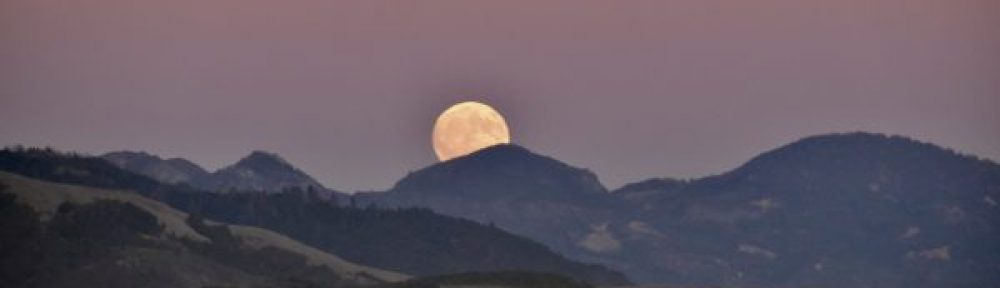
No real relation to this post. Just a really fun sail on Moonrise and I’m looking at old photos.


H is for Having a Plan

I recently had a nasty little short-lived (thankfully) virus or something that caused me to puke violently. It didn’t last long and I felt fine the next day, but it did get me thinking about what would happen should either of us suffer from a serious case of seasickness. I don’t enjoy hurling even when I have a regular toilet to flush. The idea of having to throw up on my boat is kind of, well, let’s just say I don’t want to.

Not too bad, really.

Neither of us has ever been seasick (knock on wood).  We’ve certainly had the opportunity. We’ve been in conditions that have made us feel washed up and spit out. We’ve traveled through the dreaded haystack waves off Cattle Point. When we brought Galapagos up the coast from Astoria, the sea state was what could be called ‘washing machine’ until we got far enough off the coast. Even in our heavy boat, that was pretty nasty. I remember making the comment that if we were ever going to get seasick, that would be the time. Over the years of cruising locally, we’ve both felt like we’ve been on the edge of seasickness, but we’ve never fallen over that edge. We’ve always been able to keep it at bay. But what if we can’t? What if it happens?

Many experienced sailors say that seasickness is something that every sailor experiences at some point. That makes me slightly nervous. I mean, seasickness can be very debilitating and for some people it can last for days. You could deal with dehydration, which could be serious. That doesn’t sound like something I would willingly choose.

Moonrise crashing through the sea. No seasickness in sight.

Moonrise crashing through the sea. No seasickness in sight.

Still,  my friend Fran ‘The Frontal’ Cortex is in charge of this one, fortunately. The Fear-o-Meter registers mild anxiety, the kind that can be thwarted by getting more information and good planning. That’s key: sometimes people get mildly anxious about something because it’s ‘unknown’. In fact, this is a normal part of human experience, right?  Frankly, I’m not even sure it qualifies as anxiety unless you just let it sit and do nothing about it. So, if people can make it ‘known’, and have a plan for dealing with it, the anxiety goes away. Whew.

Let me give you another example from the archives of my memory. I once worked with a woman who came to see me because she was feeling panicked whenever she had to drive on the highway. She professed she had been driving for years, had never had an accident and that this panic had come upon her suddenly.  She thought there must be something dreadfully wrong with her and she was worried she had Panic Disorder.

During the first session I questioned her closely and determined that she seemed like a well adjusted and even-keeled individual. I felt confused by her alleged panic. She had no traumatic incidents regarding driving, no prior history of trauma, no prior history of anxiety, no ANYTHING that seemed amiss except for her fear of driving on our roads.

Upon further questioning, she revealed that she had just moved to the Puget Sound region from a small town in the midwest; a town she had lived in for her entire life. There was no traffic there and only really one major road. She also didn’t know how to read a map because she had never needed one.  Her fear about driving on the highway was not one about being in traffic or having an accident. She was afraid that she wouldn’t know where to exit. And that’s as far as her thinking went.

So often when people feel afraid, they just stop thinking things through. They don’t ask this one  critical question: And then what?  They just hit a kind of wall and then the thinking stops. So when I asked this client what exactly she was afraid would happen when she drove on the highway, she said to me, “I’m afraid I will not know where to exit the highway.” I replied with that old therapist standby, “And then what will happen?”.

She looked confused by the question and said, ‘I don’t know.”.  That’s a sure sign that an unconscious belief is at play. She said nothing and continued to look confused so I rescued her.

“I mean, what will you do? Will you just keep driving forever and ever? What will you actually do?”

Knowledge dawned on her relieved face.

“I guess I will just get off at the next exit and go back! I never thought of that before. Of course I won’t just keep driving forever. ”

Yes! That’s really all it took to relieve her mind. She was just stuck at the point where she felt afraid. Even though she did not have an anxiety disorder, she did not actually realize that she had not thought it through. Perhaps she was just too afraid to think, since we know that Fran ‘The Frontal’ Cortex doesn’t work well when Amy G. Dala starts having her tantrums.

I had her bring a road map to the next session. We spread it out on the floor and I taught her some basic map reading skills. We therapists have to be Jills of all trades sometimes. Her homework assignment was to find the mall on the map and drive there. (Yes, this was before smart phones. I’m that old.) She would come back and report to me how that went.  Our next session she arrived beaming with success. She was ‘cured’ in three sessions. I love when that happens.

So when I feel the bit of anxiety about getting seasick, I ask myself,  ‘And then what will happen?”. And I ask again and again until there are no more answers. This allows me to research what I need and come up with a plan. So what’s the plan for mitigating sea sickness? OK. Here’s all the book learning I have so far:

Stay well hydrated. Start out the trip well hydrated.
Stay above deck when below is uncomfortable.
Don’t get over heated. Stay out of the sun.
Keep your eye on the horizon. Stand behind the wheel if it helps.
Adjust sails to make the ride more comfortable if necessary.
Take medications at the first sign of nausea.
Keep a supply of powdered electrolyte replacement on board.
Get enough sleep. (Ha, that could be tough.)
Remember that this should pass.

Got some other tips?

Unless we get some kind of serious sea sickness that just doesn’t go away, I think we’ll be able to handle it. Sometimes anxiety is really just a need for a plan and for information. It’s just your brain, doing its job to mitigate some possibility that is actually based in reality in the physical world. If the information and plan is enough to alleviate the anxiety, as in this case, then well done, brain. Nicely played.

Just joined us for the A to Z Challenge and want to read from the beginning? Here’s a link to the first post. Just click on ‘next’ to go to the next post.

A little 'Boat Yoga' aboard Moonrise. Never got sick even once. Damn that was a fun boat.

A little ‘Boat Yoga’ aboard Moonrise. Never got sick even once. Damn that was a fun boat.


G is for Getting on a Chicken Bus

I encourage young people from western nations like the United States to do their traveling to less developed countries while they are young. They need to be old enough to make reasonably thoughtful choices, but not so old that they have spent literally decades being swaddled in the false sense of security that comes with living a middle class life in the midst of laws intended to keep a person safe from themselves.

We have seat belt laws, speed limit laws, building codes laws, car safety laws, stop signs that should be heeded… the list seems almost endless. And we have laws about how long a commercial driver can be behind the wheel when taking passengers or freight over our roads. These laws seem like good common sense laws. We get used to them and take them for granted.

This doesn't look like a country I am traveling to. But, um, NO.

This doesn’t look like a country I am traveling to. But, um, NO.

We have lived such a swaddled life. And in my protected world, I do not ride chicken buses. In fact,  I almost never ride public transportation even here at home because, hello, I don’t go anywhere that makes it necessary. If I lived in Seattle, it’s likely I would ride the bus frequently because driving and parking in Seattle is a nightmare. There is good public transport there, unlike here in Tacoma. Still, I like my buses clean, on time, in good repair and not overly crowded. HAHAHAHAHA! Can you say, “Good luck, Melissa. Didn’t you say you’d be traveling to Mexico and Central America?”  Yeah. I did.

I probably wouldn’t be very concerned about any of this if it weren’t for my friend. Her 16 year old daughter went to Bolivia to study on a Rotary Club scholarship and never came home. Her daughter got on a bus with a bunch of other students. The driver had been driving for over 24 hours. He fell asleep at the wheel. The bus went off the cliff and killed her. Sure, that’s not likely to happen to me, but remember: Amy G. Dala does not play odds. She plays to survive.

Our clean, efficient, regulated buses with drivers who may be cranky but are unlikely to drive off a cliff.

Here’s what my mind tells me riding a chicken bus will be like: crowded, smelly, hot, filled with noise, with people sitting in my personal space, and just possibly dangerous. Why would I choose such a thing? Why would I willingly get on a bus like that without wearing a respirator and protective bubble wrap suit? Because some places I understand that’s just how you get around. That or walk. Part of the entire point of this trip is experiencing how they live in other cultures, something Fran ‘the frontal’ Cortex looks forward to but Amy G. Dala really doesn’t. Besides, I know Mike will be the first one on that stupid bus and he won’t even save me a seat. That being said, check out the Fear-o-Meter.

Well, okay, it’s maybe a little irrationally high. I mean I kind of want to do it for the adventure part of it, and to say I did it. Probably if we aren’t going a great distance I am going to be fine.  But if we’re going to someplace far away, and there are mountains involved, it’s likely I’m going to want to ask the driver if he got a good night’s sleep.

Nah, I’m totally going to do it. Just shut the hell up, Amy.