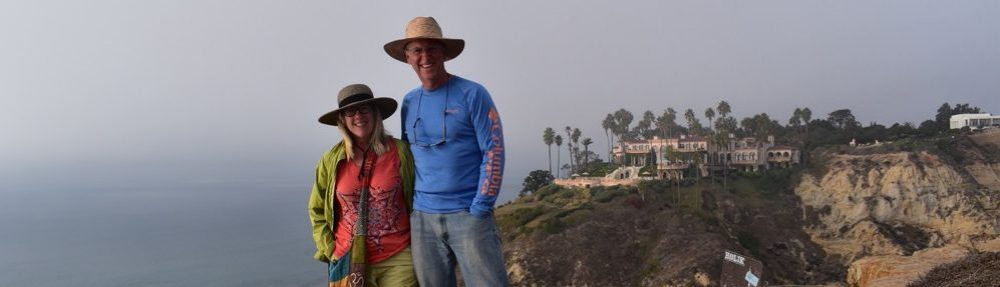
U is for Ultra Violet Death Rays

I am currently in the market for a long sleeved, billowy linen shirt that will flow romantically in the breeze when we are in sunny locales. I want it to be long enough to wear as a short dress, be loose fitting, and do a good job of blocking a lot of sun. Maybe it will be turquoise? Lavender? Cream? I don’t get to shop for clothes much anymore, so I’m going to really enjoy this because this shirt is a need. Not a want.

I’m rating this kind of between alert and alarm. It’s enough of a concern that I’m already stockpiling stuff to keep the sun off my skin.

Our skin is really coddled up here in the rainy, cloudy Pacific Northwest. Except for in the summer (and some weird days this month) we don’t have to think too much about UV damage to our skin. In the winter, most people are indoors most of the time, and when they are outdoors it is likely to be raining, or at least have a heavy cloud layer hanging so low you can touch it. The sun never gets far enough above the horizon in the winter to do much damage.  That’s going to be changing as we head south in the boat.

In the summertime even this far north, Mike and I have to wear good layers of sun protection in order to keep from getting burned. I remember when we had Moonrise and that open cockpit, sun protection was really a priority and there were years we both did some damage to our skin. Here’s a blast from the past article (rather tongue in cheek) from 2012 where I wrote about a completely scientifically accurate survey I did regarding how men and women differ in their attitudes toward sunscreen on tender skin. Since the day I wrote that article Mike has been really good about putting his own sunscreen on. As a special treat for looking at that post, you’ll get to see a photo of me slathering sunscreen on Mike’s face. Is it a coincidence that he now slathers it on himself? I think not.

I love this photo of us on Moonrise, but wow we were really exposed to the blistering rays.

I’d like to say that my biggest worry in terms of sun damage is skin cancer. But it’s not. I already did enough damage to my skin long ago to put me in the risk category for skin cancers that need removing. We get our skin checked and so far, so good. No, my biggest concern is aging prematurely. I’m in my ’50s. Do you blame me? Say what you want, but I don’t want my skin to look like wrinkled leather. It’s bad enough as it is.

Here are some of the ways we’ll be protecting our skin as we travel.

  1. Hats. I have a hat I’ve been wearing for years when boating. That hat is so ubiqitous that another blogger recognized me at the marina in La Paz because I was wearing that blue hat. Weird. We’ll probably have a good selection of hats for both of us aboard.
  2. Long sleeved shirts, some with UV protection in them. If we can swim in them, that’s even better. I bought a couple of 50 SPF shirts from Lands End on sale this year. I’m stocking up. I’d like to have a couple of these with thumbholes so that the backs of my hands are covered. I’ve seen some swim leggings I want to check out as well. Got any favorites you can recommend?
  3. A parasol. That’s right. I am going to get a couple of nice ones. I have a paper one on board and used it this summer during some days with a lot of sun. It was quite pleasant. Portable shade wherever I go.

    I would TOTALLY carry one of these.

    I would TOTALLY carry one of these.

  4. Long sun dresses and pants. We’ll just need to get some for hot climates.
  5. We have that great hard dodger! Yay! Shade on the boat. We also have a full boat cover that hangs over the boom. We understand from the previous owner that it is a great addition in the South Pacific. It is, however, dark blue, and it’s unlikely we’d deploy something that big unless we are staying put for awhile.
  6. Sunglasses. Eyes need protecting from the sun, too. We’ll just have to spend the money on good prescription sunglasses.
  7. Sunscreen. Can you recommend a good sunscreen that won’t poison the coral reefs and will not run into our eyes? Are those two things mutually exclusive?

    Did I miss anything? What recommendations do you have? We’ll both be going to our dermatologist in the next few months for a final skin check before we go. Got to take care of that skin!

    Just joined us for the A to Z Challenge? The series on Anxiety starts here.

  8. From my trip with Andrew back in 2008. Southern Utah. Another beautiful place where the sun will take the skin right off your face.

    From my trip with Andrew back in 2008. Southern Utah. Another beautiful place where the sun will take the skin right off your face.


T is for Thinking it Through, Testing the Waters

In the post on Reality Checks and Relationships I made a few critical points I hope you will remember:

  1. Your partner is not responsible for your anxiety, even though it exists in the energetic system between you, and both of you end up dealing with it one way or another.
  2. Sometimes anxious people are right to worry, even if they have an overly dramatic way of doing it.
  3.  If you acknowledge the possibility, regardless how remote, that their worry may be based in reality, (if that is, indeed, true)  then it can help diffuse anxiety and allow you to work as a couple.
  4. When trying to decide if a partner is actually creating part of the anxiety or could help diffuse anxious tension, looking at solutions using ‘results and reason’ is a good place to start. In that way you may move toward compromise.

He’s perfectly safe standing up in that Portland Pudgy.

In this post, I am following up on that last point.  I’ve created an exercise for you to test the waters around the stories your inner Amy G. Dala tells you. This exercise will help you decide when and how your partner can help relieve anxious tension, specifically around boating safety issues, without being responsible for your underlying overly active Amy. G. Dala. Yay! It’s really just a way to start a conversation and to engage your partner in cooperative problem solving. It’s a way that you can stop wallowing around in the puddle of feelings that is anxiety and begin taking concrete action.  It also helps you see clearly when your partner can do nothing so you need to let them off the hook and handle it yourself.

Remember:  we are talking only about anxiety, which is an over reaction to perceived threat that is only marginally, if at all, based in reality. We’re not talking about fear, which is a reasonable response to a real threat that is completely reality based. If my boat has lost its engine and we are being blown toward rocks, that feeling I’m going to have is called fear and is based in the physical world. If my partner insists that she never needs to use safety equipment because she is somehow too skilled for that, I’m going to be worried because she is being stupid. (Maybe I should be considering the wisdom of sailing with her.)

When S/V America was in port.

You’ll need a piece of paper or a notebook, and something to write with. Yes, please, do this the old fashioned way. You still remember how to make the letters, no? Writing things on paper by hand is a more visceral experience than typing them into a phone or laptop. Our bodies recognize writing this way. Get out a straight edge and a number 2 pencil and go for it.

Divide the sheet of paper into 4 columns like in the photo.  You are creating a spreadsheet the way you may have done in 5th grade if you are my age.  Please do not be tempted to just create a spreadsheet on your computer. That’s missing the point about this being a visceral experience. Computer spreadsheets are in your head. I want this to be in your body. You could even make it artistic if you want to.

Fran ‘The Frontal’ Cortex is going to star in this show because we want cool reason for this exercise. Make a numbered list of the things that create anxiety for you. This is a working document, so you can always add to it. Just start with the biggest worries first, the ones you know Amy G. Dala spins her web around all the time. Try to be specific, not general. For instance, putting ‘I’m afraid something bad will happen’ is so general that there will be little fruit in discussing solutions.

Make a chart.

In the next column by each item, put a number between 1 and 10 that describes how anxious you feel when you think about that fear. A 10 would be sheer panic. Put a slash like this / by the number because your partner is going to do this, too and you want to leave room. When you are finished, have your partner rate their level of anxiety for each item. (You might want to do this out loud by reading them the list so they don’t see your numbers. It’s ‘cleaner’ that way.)

Next is the brainstorming session. (We will assume, for this exercise, that only one partner actually has clinical anxiety.) What practical solutions can you come up with to bring your number closer to your partner’s? What solutions can your partner think of? If both numbers are high, then what needs to happen to bring them both down? Be creative. Think of everything. Ask other people for their input, too.

For instance, take a look at number 1 on my chart, ‘We will crush another boat when we leave the slip.’.  Notice that my anxiety is at a 6 on this, while Mike’s is at a 3. (Anyone who doesn’t have a certain amount of anxiety pulling a boat out of a slip probably isn’t paying attention.) All the ways we could help bring my high 6 down closer to his 3 are listed in the brainstorming section. Notice I lined through buying a bow thruster. That’s because it’s unrealistic for us at this point. In a brainstorming session, be sure to write down everything you can think of. You can discard the ones that won’t work later.

Our sweet little Walker Bay has been good to us in these waters.

Pick one or two solutions and begin putting them into practice. After putting some of the brainstorming suggestions into practice, go back to the chart and rate your anxiety again to see how much it has come down. Rinse and repeat as necessary.

If you and your partner have come up with practical, reasonable, physical world solutions that you’ve agreed to, put those into play, and your anxiety is not decreased, then it’s on you.  Your partner has done their part. You’ll need to go to the other coping skills you have developed and let them off the hook. See how that works?

For example, say you are worried about anchoring out. You realize this is irrational because you know that thousands of boaters anchor out all the time without a problem. Your partner wants to anchor out. Asking your partner to never anchor out is unreasonable. What would be a reasonable compromise? Making sure there is a good dinghy to go ashore? Understanding how anchoring works? Practicing for small amounts of time in safe, quiet waters? Meet each other halfway. Give a little. Whatever anxiety is left after you’ve compromised and done those things is up to you to handle without burdening your partner with it.

Note to non-anxious partners: this exercise requires you to put your ego to bed for awhile. If you expect your partner to be realistic and honest, then you must do the same. Dig deep and discover if you are at all concerned about any of the same things, even if you believe them to be unlikely.

For instance, some people are afraid they will fall off the boat. Even if you have never even given it a conscious thought, you know that people do, actually, fall off boats all the time. It’s a real thing that happens and it’s likely that you take steps to prevent it, even if those steps are largely unconscious. Think hard about it. Since it actually does happen, you should consider taking some precautions or identifying out loud the precautions that you already take.  Denying it’s anything to be concerned about is not being cooperative in the context of this exercise and could easily be a root cause of your partner’s apparent over-concern.  Unless the fear listed is something like ‘unicorns are sleeping in our bed and pigs are flying around us’, you’re better off putting a number greater than 0 in the box. Shit happens. And if you don’t admit that, you are almost certainly contributing to the level of anxiety on your boat.

At the end of the day, this little exercise is only a way to get a conversation going and put things in writing in terms of planning and problem solving, without casting blame. When people write things down together they are more likely to follow through, especially when they intend to revisit the paper and see how things are going. I cannot stress enough, however, that this kind of cooperation requires two mature adults who are doing their best to be rational and reality based, and who both care about the other’s happiness and contentment on the boat. There has to be willingness to give a little.  It’s a relationship. It’s about both people.

Just joined us for the A to Z Challenge? Read from the Letter A.

This is just so fast! I could barely believe it.

This is just so fast! I could barely believe it.

S is for Sharks

Well of course it is! I blame Peter Benchley. If he had not written that novel, Jaws, Steven Spielberg would never have had a giant robo-shark built for his sensationalist movie, the movie that scared people from swimming at the beach forever and ever. I refused to see the movie, being on the side of the shark, but that didn’t mean I didn’t have to deal with the aftermath of it as sharks became the demons of the sea in the collective consciousness.  I saw a preview of it in a theater once and I have never been able to get the image out of my head.   I never read the book, either. I don’t deliberately go out and search for things that will scare the shit out of me, and neither should you.

I like my sharks extra cute.

I like my sharks extra cute.

Benchley claimed he was an ocean conservationist and his story was meant to raise consciousness about the plights of our oceans and to educated the public about the dearth of knowledge about sharks. Really, Peter? Really? By making the sea in to a place that is the stuff of horror movies? That’s how you choose to do it? Ok. Well, you are dead, so you can’t defend yourself. But, hmmm. My hero Jacques Cousteau didn’t like your book or your movie, and neither do I. Let’s check the Fearometer.

Well, it’s pretty decently high. Maybe it will get lower as time goes on. I really look forward to snorkeling over reefs and swimming in the ocean. I remember as a child swimming in the Gulf of Mexico without fear, even as people were catching sharks with rods and reels from the beach. I remember, too, seeing one swimming in a wave. But they never bothered me and I let them live their lives in peace.

I think the difference between then and now is that it has been decades since I swam in the sea. (Except for the few times in Hawaii a few years back. And I was pretty vigilant but refused to be stopped.) My plan is to swim where the locals swim, and stay out of the areas where people are fishing, to stay out of the water at dusk, avoid movements resembling a distressed fish, and possibly disguise myself as poisonous seal. I’m guessing I’ll probably always check the water first, before jumping in. I mean, why not?

I swam in this water. It was supposed to be the local swimming hole. It was bloody cold. But fortunately, no sharks. Thank goodness. Still, I was a little worried because that water is not clear. You see nothing under you. Shudder.

I know someone whose son-in-law was killed by a shark in Hawaii. He was fishing from his kayak and dangling his foot in the water. The shark doesn’t know the difference between a fish and your foot, people. Keep dangling body parts out of the water when you are fishing where sharks want to steal your catch for an easy meal. Seems like just good sense to me. Think about it.  I shop where it’s easiest for me to shop. Why should sharks drive way across town to buy organic when they can get a quick bite where they live? It’s just good sense.

You know what else we won’t be doing? We won’t be swimming behind the boat, attached with a line (like shark bait, you know) when we’re at sea. I know there is all this romance associated with taking a dip in the briny deep, swimming naked attached to your boat with only a tiny line, but guess what? No. That’s what. Just no. I say ‘we’ here because I suspect my romance minded spouse would love to take a dip in the middle of the Pacific, tied to Galapagos only by a floating line, the kind sharks think are fishing line. )That’s right, buddy. I’m talking to you!)

Mike tried his hand at fishing this summer and caught this little Dogfish shark, twice. I got to pet him. He was kind of cute, and had no teeth. So it was OK.

So where once deep water felt ok to me, it’s been so long that I’ve lost my groove with it. It makes me anxious to think of sharks being close to me in the water. But, after all, most people feel that way, too. It’s just one of those human things to be worried about monsters with teeth, at home in their own element when you are so outside of your own. I’m pretty sure I’ll get over that one. Well, probably anyhow. Maybe.